
Things to do in the Burren: choose your main stop
The things to do in the Burren span a working limestone landscape, state-owned national park land, prehistoric remains and managed visitor attractions. Start by deciding whether you want a walk, a cave visit or a coastal outing. These are different ways to spend the day, with different access arrangements. Free entry to the national park applies to the park, while cave admissions and the Cliffs visitor experience are separate purchases.
For a first route, choose a main destination and leave room for the journey rather than treating every name on the map as a quick roadside stop. Rough limestone, cave steps and exposed coastal terrain each deserve attention. Read the transport and parking guide alongside the attraction page, especially when travelling by bus. A route that looks compact on a map can still require separate connections.
Caves and the Cliffs visitor experience
Aillwee offers a guided underground visit. Its direct standard visitor product combines the cave tour, birds of prey and cheese tasting; the cave passages are unsuitable for wheelchairs and pushchairs. Doolin Cave is a different underground stop, with a long stalactite and steps down into the cave and back up. Choose between them with the practical details in the Aillwee guide and Doolin Cave guide.
The Dublin excursion featured here includes return transport, a driver-guide and admission to Aillwee and the Cliffs of Moher. Its birds-of-prey exhibition ticket is included only from 1 November to 31 March; lunch is extra. This is a way to combine those visitor attractions, rather than a route through every place in this overview.
Our take: cave and cliffs
Our take: This Dublin trip includes entry to Aillwee Cave and the cliffs.
Hand-picked tours, booked through GetYourGuide. Prices are indicative starting prices in euros (as of October 2026). Tap a tour for live availability and the current price in your currency.
Aillwee and the Cliffs from Dublin
Combine cave admission and the Cliffs visitor experience on a Dublin day excursion; the wider Burren stops described here are separate planning ideas.
Ballyvaughan and Fanore, with Black Head
Ballyvaughan gives access to the Wood Loop, a marked circuit using minor roads, green lanes, woodland and open ground. Its purple waymarks help distinguish the route from tempting tracks across neighbouring land. The loop passes near Aillwee and shares part of the Burren Way. Plan it as a walk in its own right, with appropriate footwear, rather than an incidental detour between admissions.
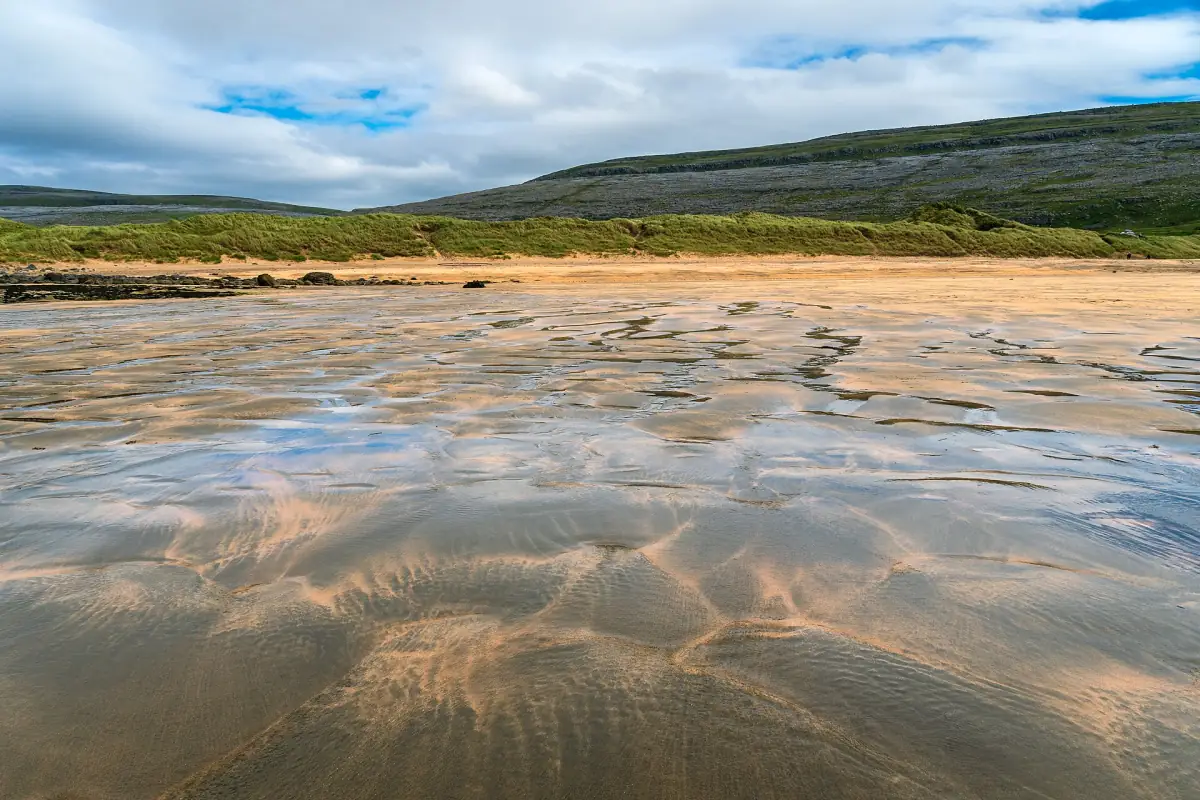
Fanore has a sandy beach, dunes and limestone ledges partly exposed at low tide. It is also the starting point for the demanding Black Head Loop, which includes hill sections and a stretch of the R477 where traffic needs attention. A beach stop and the full loop are very different commitments. Follow beach signs and current warnings for any water activity; the presence of facilities is not a promise of supervised swimming on your date.
Poulnabrone and the national park
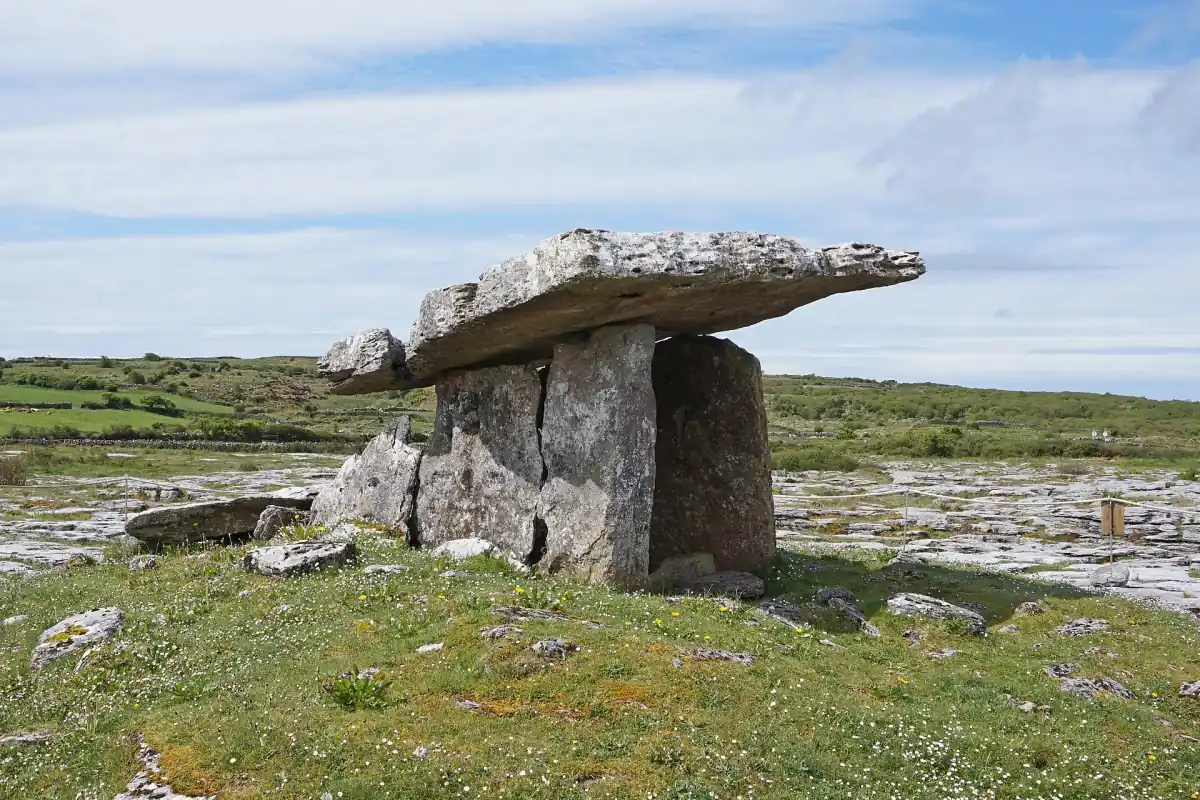
Poulnabrone is a protected portal tomb whose upright stones and capstone make the relationship between human history and limestone scenery particularly visible. Treat it as a monument, respecting barriers and keeping off the stones. The gravel approach has an uneven surface. Our history guide explains the burials and why their dates should not be treated as an exact construction date.
For marked trails, use the Burren National Park guide. Corofin is the recommended starting point for information, with toilets at the information point. There are no visitor facilities or designated roadside parking at the trailhead. Mullaghmore routes are very difficult; a shorter marked trail is a different choice, not a guarantee of smooth ground.
Doolin and the coastal path restrictions
Doolin combines traditional music, accommodation and access to the pier. The published ferry season ended on 1 November 2026, so plan an island or boat outing around newly published sailing availability rather than assuming a winter departure. The village guide helps separate time in the village from the practicalities of reaching a sailing.
For the Cliffs, the coastal-walk status dated 1 August 2026 closes the southern Liscannor and Hag’s Head section and prevents a through walk from Doolin to the visitor centre. The northern Doolin to Surfers Path section requires returning the same way. Use the designated visitor areas for a Cliffs visit; never use the road at Surfers Path as a bypass or climb fences to continue.
Galway as a starting point
Galway works as a departure point for Burren day excursions and is linked to the region by bus. The coastal route through Fanore uses the 351, while the 350 takes the N67 between Ballyvaughan and Lisdoonvarna. Check the actual stops of a chosen departure before combining a village visit with an attraction. For time in the city itself, use Galway city guide. Keep the Burren part of the plan focused on the landscape and visitor sites you most want to experience.
Questions about your visit
Is the whole Burren a national park?
The national park covers state-owned land within the larger Burren region. Private farmland and separate visitor attractions have their own access arrangements.
Can I combine both caves with a walk?
Choose your main activity first and allow for transfers, cave access and the difficulty of the selected trail. Each cave has its own visit arrangements.
Can I walk from Doolin to the Cliffs visitor centre?
The coastal-walk status dated 1 August 2026 gives no through route. The northern section from Doolin requires returning by the same path.